Source industrial embedded systems nand flash for PC server DVR
Find and compare 30 industrial embedded systems nand flash options from verified suppliers. These products support PC, server, and DVR applications with capacities ranging from 128MB to 64GB and feature SLC NAND Flash technology for high reliability.
Key considerations
Products List


Comprehensive Sourcing Guide
Strategic Sourcing Guide for Industrial Embedded Systems NAND Flash
Procuring NAND flash memory for industrial embedded systems requires a rigorous approach that prioritizes reliability, environmental resilience, and long-term availability over raw performance metrics. Unlike consumer-grade storage, industrial components must withstand extreme operating conditions, including wide temperature fluctuations, high shock and vibration levels, and continuous 24/7 operation cycles. This guide synthesizes available market data to help buyers navigate the selection process, focusing on critical technical specifications, compliance verification, and supplier evaluation strategies without relying on unverified claims or specific vendor recommendations.
Technical Architecture and Interface Standards
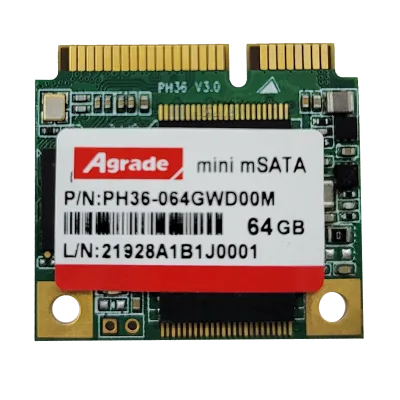
The foundation of a successful procurement strategy lies in understanding the specific interface and flash architecture required for the target application. In the industrial sector, the choice between IDE and SATAIII interfaces is often dictated by legacy system compatibility versus modern bandwidth requirements. Data indicates that IDE interfaces are still prevalent in specific embedded contexts, offering a robust connection for older server or DVR/NVR architectures. Conversely, SATAIII interfaces provide significantly higher throughput, with observed read speeds reaching approximately 112.3 MB/s and write speeds around 62.7 MB/s in specific industrial modules.
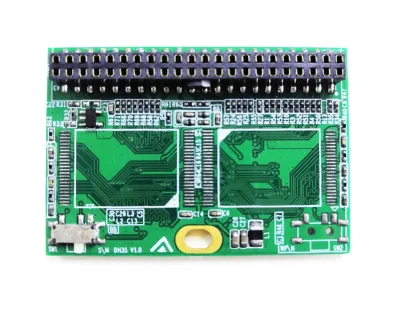
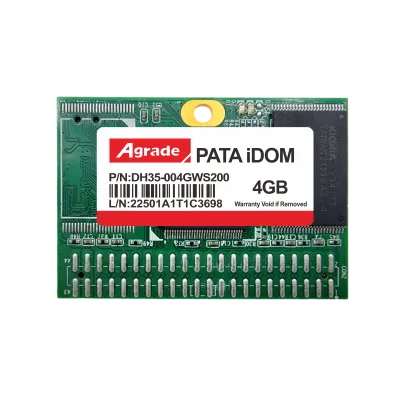
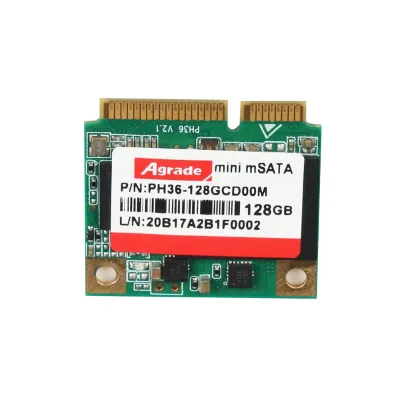
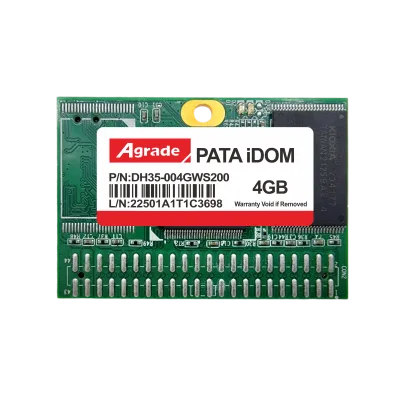
Flash memory type is equally critical. The industry standard for high-reliability applications is Single-Level Cell (SLC) NAND Flash. Unlike Multi-Level Cell (MLC) or Triple-Level Cell (TLC) variants found in consumer electronics, SLC technology stores only one bit per cell, offering superior endurance, data retention, and resistance to data corruption under stress. Procurement teams must verify that the selected component explicitly specifies SLC NAND Flash, as this is the primary differentiator for industrial durability. The physical form factor also varies; some solutions utilize Internal DOM (Disk On Module) designs with dimensions such as 79409mm, while others may be packaged as standard SSDs. Buyers should confirm the exact physical dimensions and weight, noting that package weights can range from 100g to 170g depending on the inclusion of protective casing and mounting hardware.
Environmental Resilience and Operating Parameters
Industrial environments often present harsh conditions that consumer-grade hardware cannot survive. A primary consideration is the operating temperature range. Standard commercial components typically operate between 0℃ and 70℃, but industrial specifications frequently demand Wide Temperature (WT) capabilities ranging from -40℃ to 85℃. Some high-reliability modules also specify a storage temperature range as extreme as -55℃ to 95℃, ensuring data integrity during non-operational periods in unheated facilities or outdoor deployments.
Mechanical robustness is another non-negotiable attribute. Components intended for mobile or vibrating environments must demonstrate high shock and vibration resistance. Verified data points to shock resistance levels of up to 1500 G and vibration resistance of 20 G, which are essential for applications in transportation, heavy machinery, or aerospace. The operating voltage is another critical parameter; standard industrial modules often support dual voltage inputs of 3.3V or 5V with a tolerance of ±5%, ensuring compatibility with various power management systems. The shell material, typically Aluminium Alloy or ABS, plays a vital role in thermal dissipation and physical protection. Buyers should verify that the casing material matches the thermal requirements of the specific installation environment to prevent overheating or mechanical failure.
Compliance, Certification, and Reliability Metrics
In the absence of specific manufacturer claims, buyers must independently verify compliance with international safety and environmental standards. High-confidence market observations indicate that reputable industrial flash solutions often carry CE, FCC, and ROHS certifications. These certifications ensure that the product meets electromagnetic compatibility requirements, safety standards for electrical equipment, and restrictions on hazardous substances. However, the presence of these marks on a product listing should be treated as an observation rather than a guarantee; procurement teams must request valid certification documents from the supplier before finalizing orders.
Reliability is quantified through the Mean Time Between Failures (MTBF). For industrial-grade components, an MTBF of 2,000,000 hours is a benchmark that signifies exceptional longevity and reduced failure rates over the product's lifecycle. This metric is crucial for calculating total cost of ownership and minimizing downtime in critical infrastructure. Additionally, warranty terms serve as a proxy for manufacturer confidence. A standard warranty period of 5 years is observed in the market for high-reliability industrial SSDs, reflecting the expected lifespan of the SLC NAND flash. Buyers should ensure that the warranty explicitly covers the specific application environment and includes provisions for replacement or repair in case of premature failure.
Capacity, Performance, and Application Scope
The capacity of industrial flash storage varies significantly based on the specific use case. Market data shows a wide range of available capacities, from small form factors like 128MB or 256MB up to larger modules offering 4GB, 8GB, 16GB, 32GB, and even up to 64GB in some aSLC configurations. The choice of capacity depends heavily on the operating system requirements, application software size, and data logging needs. For instance, embedded systems running lightweight real-time operating systems may only require 2GB to 64GB, while server applications might demand higher densities.
Performance metrics must align with the application's data throughput needs. While some industrial modules offer read speeds up to 358 MB/s, others in the reliable series may operate at lower speeds, such as 112.3 MB/s, prioritizing stability over raw speed. The application scope is diverse, ranging from PC and server infrastructure to DVR/NVR systems and industrial all-in-one machines. The "Reliable Series" designation often implies a focus on high-reliability features such as low power consumption and high shock resistance, making these units suitable for critical industrial automation tasks. Buyers should match the specific read/write speeds and capacity to the workload intensity of the target system to avoid bottlenecks or unnecessary over-specification.
Supplier Evaluation and Service Capabilities
Selecting a supplier for industrial components involves more than just price comparison; it requires a deep assessment of service capabilities and supply chain stability. Key attributes to evaluate include the supplier's willingness to accept OEM and ODM requests, which allows for customization of firmware, packaging, or form factors to meet specific project needs. The availability of after-sale service is paramount, as industrial deployments often require rapid response times for troubleshooting and replacement.
Shipping and logistics capabilities are also critical factors. Reliable suppliers typically offer multiple shipping options, including DHL, EMS, UPS, and FedEx, ensuring that components can be delivered globally with tracking and insurance. The place of origin, often Guangdong, China for many industrial electronics, should be verified to understand the manufacturing ecosystem and potential lead times. Buyers should also check the item condition, ensuring that all supplied units are new and not refurbished, as refurbished components may not meet the strict reliability standards required for industrial use. The selling unit configuration, often listed as a single item, should be confirmed to ensure that the Minimum Order Quantity (MOQ) aligns with the project's initial procurement needs, which can range from 1 unit for prototyping to 500 units for mass production.
Quality Control and Long-Term Procurement Strategy
Implementing a robust quality control process is essential to mitigate the risks associated with industrial component failure. Buyers should establish a protocol for verifying the physical attributes of incoming shipments, including checking the model number, capacity, interface type, and physical dimensions against the purchase order. The presence of a box or specific packaging should be confirmed to ensure the components are protected during transit. Additionally, verifying the working temperature range and storage temperature specifications upon receipt is a critical step to ensure the product matches the intended environmental conditions.
Long-term procurement considerations extend beyond the initial purchase. Buyers must assess the supplier's ability to maintain product availability over extended periods, as industrial projects often have lifecycles spanning 10 to 15 years. The acceptance of OEM/ODM services is a strong indicator of a supplier's flexibility and commitment to long-term partnerships. Furthermore, understanding the specific series of the product, such as the "Reliable Series," helps in identifying components that are designed for sustained operation. By focusing on these strategic factors, buyers can build a resilient supply chain that supports the demanding requirements of industrial embedded systems, ensuring that the selected NAND flash solutions deliver consistent performance and reliability throughout their operational life.
FAQs
What interface types are available for industrial embedded systems nand flash?
Industrial modules support both IDE and SATAIII interfaces depending on system requirements. IDE is common for legacy DVR and server setups, while SATAIII offers higher throughput for modern applications.
Which flash type ensures high reliability for industrial environments?
SLC NAND Flash is the standard for high-reliability industrial applications due to superior endurance and data retention. This technology stores one bit per cell to resist data corruption under stress.
How wide is the operating temperature range for these components?
Standard units operate from 0 to 70 degrees Celsius, while wide temperature versions function between -40 and 85 degrees Celsius. Storage temperatures can extend further to -55 to 95 degrees Celsius.
What certifications do these industrial flash drives typically hold?
High-confidence market observations indicate that reputable solutions carry CE, FCC, and ROHS certifications. These marks ensure compliance with electromagnetic compatibility and hazardous substance restrictions.
Can buyers customize packaging and firmware for their projects?
Yes, suppliers accept OEM and ODM requests for customization of firmware, packaging, and form factors. This flexibility supports specific project needs and long-term partnership requirements.
What is the typical warranty period for industrial SSDs?
A standard warranty period of 5 years is observed for high-reliability industrial SSDs. This reflects the expected lifespan of the SLC NAND flash and manufacturer confidence.
Which capacities are available for embedded system storage modules?
Available capacities range from 128MB up to 64GB depending on the specific model and series. Options include 4GB, 8GB, 16GB, and 32GB for various embedded system requirements.